
Search Virginia Inmate Records
The correctional system in Virginia comprises federal, state, private, and county jails. Each correctional facility is designed to accommodate offenders in a controlled environment while providing them with the opportunity to self-improve. There are 4 federal correctional facilities in Virginia, housing persons convicted of federal crimes. At the state level, Virginia has 25 state prisons for persons convicted of crimes where the sentence exceeds one year. Likewise, there are 58 county jails accommodating persons who have less than one year's sentence. Presently, there are no private prisons in Virginia. The state officially took control of the only private prison in August 2024.
The Virginia correctional system includes female detention and juvenile correctional centers. Currently, the state has a correctional center for women located at Goochland. There are 24 juvenile detention centers across Virginia. Juvenile detention centers confine minors charged with criminal offenses.


Virginia Department of Corrections Inmate Search
The VADOC is the primary agency in charge of state-level prisons. The VADOC is led by a director appointed by the state governor. It oversees the custody, care, and rehabilitation of incarcerated individuals in the state. The VADOC is responsible for state prisons, regional jails, community correction centers, and work centers in Virginia. It maintains the safety and security of inmates and correctional staff. It also provides medical care and provides rehabilitation programs for inmates. The VADOC has three divisions - Operations, Re-entry, Programs and Communications, and Administration, overseen by the deputy director.
The VADOC keeps comprehensive records on inmates incarcerated across county jails and state prisons. Inmate records contain information on the personal details, sentencing, and parole or probation status of an incarcerated individual. The VADOC provides access to inmate records through the Inmate Locator tool, available on their website. The platform provides a searchable database to locate inmate records. It provides basic information, such as the inmate's location and release date.

Find Inmate by Name
Inmate records are accessible by name via the VADOC Inmate Locator using the first and last names of incarcerated persons. A search with the full names will return all records of inmates with the names typed. Searchers may filter through the results to locate the specific record. A complete search by name must include the full first name and at least the first five characters of the inmate's first name. Additionally, searchers may include the alias or middle name with the first and last name to locate the record. Also, information such as the detention location, sex, age, or race may be used to find the record.

Find Inmate by Number
Users may also locate inmate records using the inmate's identification number. Inmate identification numbers are assigned to incarcerated individuals within the state's prison system. The inmate identification may be used to access inmate information through the inmate locator tool provided by the VADOC. The Inmate Identification number in Virginia is a seven-digit number unique to each inmate.
How Many Inmates Are Currently Incarcerated in Virginia?
Virginia's total incarcerated population is estimated at ~56,950 people across state prisons, county and regional jails, federal facilities, private prisons, juvenile facilities, and other detention categories. Figures are approximate because daily jail counts, federal custody numbers, and pre-trial detention totals fluctuate throughout the year.
| Facility Type | Population | % of Total | Avg. Daily Cost | Capacity Utilization |
|---|---|---|---|---|
| State Prisons | ~24,500 | 43.0% | ~$118/person | ~86% |
| County Jails | ~27,000 | 47.4% | ~$140/person | ~76% |
| Federal Facilities | ~4,200 | 7.4% | ~$120/person | ~98% |
| Private Prisons | ~0 | 0.0% | N/A | N/A |
| Juvenile Facilities | ~450 | 0.8% | ~$500/person | ~45% |
| Other / Pre-Trial | ~800 | 1.4% | ~$95/person | ~70% |
| Total | ~56,950 | 100.0% | Varies | ~80% overall |
State Correctional Facilities in Virginia
The Virginia Department of Corrections operates roughly 30 major state correctional institutions, along with smaller field units and community-based facilities. The system includes prisons, specialty treatment facilities, women's institutions, medical and aged-care units, and work-release or community corrections centers.
| Facility Name | Type | Location | Capacity | Population | Security Level |
|---|---|---|---|---|---|
| Greensville Correctional Center | State Prison | Jarratt | ~3,000 | ~2,400 | Level 3/4 |
| Red Onion State Prison | State Prison | Pound | ~1,200 | ~750 | Level 5 |
| Keen Mountain Correctional Center | State Prison | Oakwood | ~900 | ~760 | Level 4/5 |
| Fluvanna Correctional Center for Women | Women's Facility | Troy | ~1,200 | ~950 | Level 2/3 |
| Virginia Correctional Center for Women | Women's Facility | Goochland | ~650 | ~500 | Level 2 |
| Deerfield Correctional Center | Medical / Aged Facility | Capron | ~1,100 | ~900 | Level 2 / Medical |
| Indian Creek Correctional Center | Specialty Facility | Chesapeake | ~1,000 | ~850 | Level 2 / Treatment |
| Brunswick Work Center | Work Release Center | Lawrenceville | ~250 | ~180 | Minimum / Work Release |
| Harrisonburg Men's CCAP | Community Corrections Facility | Harrisonburg | ~120 | ~95 | Community Custody |
Inmate Demographics & Population Trends in Virginia
Virginia's incarcerated population is predominantly male and includes a large share of people serving sentences for violent offenses, consistent with national state-prison trends. The state has reported comparatively low reincarceration rates, while sentencing patterns continue to reflect long terms for violent and serious felony convictions.
| Demographic Category | Breakdown | Notes |
|---|---|---|
| Gender | Male ~91%; Female ~9% | Women make up a smaller but steady share of the state prison population. |
| Age Groups | 18-24: ~8%; 25-34: ~31%; 35-44: ~29%; 45-54: ~18%; 55+: ~14% | The population is aging, increasing demand for medical and geriatric services. |
| Race / Ethnicity | Black ~55%; White ~35%; Hispanic/Latino ~7%; Other/Unknown ~3% | Black residents remain overrepresented compared with their share of Virginia's general population. |
| Top Offense Types | Violent ~55%; Property ~12%; Drug ~12%; Public order, sex offenses, and other ~21% | Longer prison terms are most common among violent and serious felony cases. |
| Avg. Sentence Length | ~9-10 years imposed; actual time served varies by offense and credits | Jail stays are typically shorter, while state prison sentences skew longer. |
| Recidivism Rate | ~20-22% three-year reincarceration rate | Virginia is often reported among states with relatively low return-to-prison rates. |
Parole, Release & Reentry Resources in Virginia
Virginia uses a mix of limited discretionary parole, earned sentence credits, probation and parole supervision, and reentry planning to support release from custody. Services are coordinated through the Virginia Department of Corrections, the Virginia Parole Board, community supervision districts, and local nonprofit partners.
| Program / Resource | Description | Who It Serves | Contact / Access |
|---|---|---|---|
| State Parole Board | Reviews parole-eligible cases, including many pre-1995 convictions and certain geriatric or otherwise eligible cases. | Eligible incarcerated people and families seeking parole information. | Virginia Parole Board website or case-specific notices. |
| Good Time / Sentence Reduction | Earned Sentence Credits may reduce time served for eligible offenses based on conduct and program participation. | Eligible VADOC inmates; exclusions apply for some serious offenses. | Facility counselor or VADOC time computation staff. |
| Parole Supervision | Community supervision provided through VADOC probation and parole district offices. | People released to parole, post-release supervision, or probation conditions. | Assigned probation and parole office after release. |
| Reentry Housing | Transitional housing referrals, shelter coordination, and local reentry partnerships help stabilize release plans. | Individuals leaving prison or jail who need housing support. | VADOC reentry staff, local reentry councils, or Virginia 211. |
| Employment Assistance | Job readiness, workforce referrals, vocational credentials, and employer connections support post-release employment. | Returning citizens seeking work or training. | Virginia Career Works, VADOC reentry services, and community providers. |
| Benefits Restoration | Assistance may include Medicaid, SNAP, identification documents, and civil rights restoration information. | People returning to the community after incarceration. | Virginia Department of Social Services, DMV, and Secretary of the Commonwealth. |
| Victim Notification Program | Virginia VINE provides custody status and release notifications for participating jails and prisons. | Victims, witnesses, families, and the public. | VINELink.com or the Virginia VINE service. |
What Information is Contained in a Virginia Inmate Record?
Virginia inmate records consist of various information that may help locate incarcerated persons within the VADOC system. They include:
- Name: The inmate name is the offender's legal or given name used to address or refer to them. Inmate records from the VADOC contain all known names of incarcerated persons, including their first and last names, middle names, and known aliases.
- Register No: All inmates are assigned a unique identification number called inmate identification number. This unique identifier helps to locate inmate records on the VADOC's Offender Locator tool.
- Age: Inmate records contain the age of incarcerated individuals. The inmate's age is obtained from the date of birth information recorded during the booking process. However, on records where the inmate is deceased, the date of the released column shows the age.
- Race: Inmate records hold information on the race of incarcerated individuals. The race shown on inmate records may be White, African American, Asian, Native Hawaiian, or Hispanic.
- Sex: The inmate's gender is recorded during the booking process. The gender, male or female, is contained on the offender records obtained from VADOC.
- Release Date: Refers to the estimated date the inmate is expected to be released from prisons or jails. The release date is documented on inmate records.
- Location: The specific correctional facility where the inmate is remanded is the location. This information is contained in the inmate records obtained from the VADOC. For inmates currently incarcerated the location is the county jail or state prisons. Inmates residing in halfway houses may have transitional housing as the location on their record. Likewise, for inmates in transit, their location status may not be updated until arrival at the new facility. The location status for persons who have completed their sentences or parole is Released.
Virginia Inmate Records by Counties
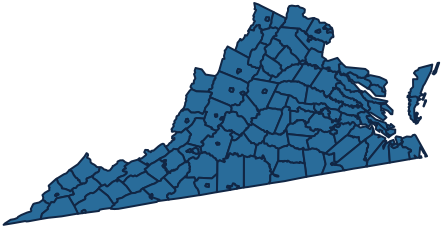
Inmate records are maintained at the county and state levels in Virginia. Each county operates its jail and keeps records related to inmates incarcerated in their facilities. Likewise, each state correctional institution maintains records of persons remanded in their institutions. Therefore, county-level inmate records and state-level inmate records are kept separately.
Generally, county inmate records are managed by the county sheriff's office. Most counties in Virginia provide electronic access to inmate records. Users may search the databases using the inmate's full name or identification number. For instance, the Henrico County Sheriff's Office provides a searchable database, County Jail Inmate Information, to access inmate records. Also, count-level inmate records include information on the charges, arrest reports, and bond amounts.
- Accomack County
- Albemarle County
- Alexandria City County
- Alleghany County
- Amelia County
- Amherst County
- Appomattox County
- Arlington County
- Augusta County
- Bath County
- Bedford County
- Bland County
- Botetourt County
- Bristol City County
- Brunswick County
- Buchanan County
- Buckingham County
- Buena Vista City County
- Campbell County
- Caroline County
- Carroll County
- Charles City County
- Charlotte County
- Charlottesville City County
- Chesapeake City County
- Chesterfield County
- Clarke County
- Colonial Heights Cit County
- Covington City County
- Craig County
- Culpeper County
- Cumberland County
- Danville City County
- Dickenson County
- Dinwiddie County
- Essex County
- Fairfax County
- Fairfax City County
- Falls Church City County
- Fauquier County
- Floyd County
- Fluvanna County
- Franklin County
- Franklin City County
- Frederick County
- Fredericksburg City County
- Galax City County
- Giles County
- Gloucester County
- Goochland County
- Grayson County
- Greene County
- Greensville County
- Halifax County
- Hampton City County
- Hanover County
- Harrisonburg City County
- Henrico County
- Henry County
- Highland County
- Hopewell City County
- Isle Of Wight County
- James City County
- King And Queen County
- King George County
- King William County
- Lancaster County
- Lee County
- Lexington City County
- Loudoun County
- Louisa County
- Lunenburg County
- Lynchburg City County
- Madison County
- Manassas City County
- Manassas Park City County
- Martinsville City County
- Mathews County
- Mecklenburg County
- Middlesex County
- Montgomery County
- Nelson County
- New Kent County
- Newport News City County
- Norfolk City County
- Northampton County
- Northumberland County
- Norton City County
- Nottoway County
- Orange County
- Page County
- Patrick County
- Petersburg City County
- Pittsylvania County
- Poquoson City County
- Portsmouth City County
- Powhatan County
- Prince Edward County
- Prince George County
- Prince William County
- Pulaski County
- Radford County
- Rappahannock County
- Richmond County
- Richmond City County
- Roanoke County
- Roanoke City County
- Rockbridge County
- Rockingham County
- Russell County
- Salem County
- Scott County
- Shenandoah County
- Smyth County
- Southampton County
- Spotsylvania County
- Stafford County
- Staunton City County
- Suffolk City County
- Surry County
- Sussex County
- Tazewell County
- Virginia Beach City County
- Warren County
- Washington County
- Waynesboro City County
- Westmoreland County
- Williamsburg City County
- Winchester City County
- Wise County
- Wythe County
- York County
Are Incarceration Records Public Information in Virginia?

Yes, incarceration records are generally considered public information in Virginia. Per the Virginia Freedom of Information Act, Virginia citizens may access public records in the custody of public bodies, including the VADOC. Consequently, the VADOC permits Virginians to request, inspect, and obtain copies of incarceration records. Publicly accessible information on incarceration records includes the inmates identifying information, incarceration history, criminal history, arrest information, and inmate sentence. Other accessible information on incarceration records includes probation and parole status, court proceedings, mugshots, and police reports.
However, while the state permits access to inmate records, some records or information on the records are restricted from the public due to privacy and security concerns. Sensitive details such as medical records, substance abuse treatment records, and mental health information are withheld from the public. Similarly, inmate records containing personal identifiers such as Social Security numbers, financial account records, and home and personal email addresses are redacted from inmate records.
Federal Prisons in Virginia
The Federal prisons in Virginia are managed by the Federal Bureau of Prisons (BOP). The BOP manages the confinement and care of persons convicted of federal crimes. It also offers rehabilitation and education programs to help inmates reintegrate into the society after their release.
Each federal prison falls under one of four security levels -minimum, low, medium, and high.
- Minimum Security Institutions: Also called federal camps, are work and program-oriented correctional institutions. They have a low staff-to-inmate ratio and limited perimeter fencing.
- Low-Security Institutions: They are also working and program-oriented but with double-fenced perimeters. Low-security institutions have a higher staff-to-inmate ratio than minimum-security correctional institutions.
- Medium Security Institutions: They confirmed medium security inmates and have their perimeters fortified with double fences and electronic detection systems. It is a cell-type accommodation with different work and treatment programs.
- High-Security Institutions: Known as United States Penitentiaries, they are highly secured facilities with reinforced fences.
The table below lists the federal prisons in Virginia:
| Federal Correctional Institution | Security Level | Capacity | Location |
|---|---|---|---|
| United States Penitentiary Lee | High Security | 1,270 | Pennington Gap |
| United States Penitentiary Lee Camp | Minimum Security | 70 | Pennington Gap |
| Petersburg Federal Correctional Complex - Low | Low Security | 609 | Hopewell |
| Petersburg Federal Correctional Complex - Medium | Medium Security | 1,562 | Hopewell |
Frequently Asked Questions about Inmate Records
You can request a Virginia Department of Corrections public record by submitting a record request to the custodian. Requests may be by U.S. Mail, email, fax, phone, or in person at the VADOC office. The request may require a fee. The fees vary based on the information and number of copies requested.
To look up inmate records online from the state prisons in Virginia, visit the VADOC website. The tool permits users to search for inmate records by name or inmate identification number. You may also access inmate records using the county's inmate locator tool provided by the county sheriff's department. Accessing inmate records requires you to have the inmate's full name or identification number. You may include other relevant information such as the age, facility location, or middle name to narrow the search results. Additionally, inmate records from county jails are accessible online through the county sheriff's department websites.
To find old inmate records in Virginia, you may need to submit a written request to the VADOC or access the records online through their website. Some old inmate records are not accessible online, especially for older inmate records. You may want to contact the department directly or visit the office to access its archives to locate the record.
You can reach out to the VADOC to request records of persons who passed while incarcerated. Also, the Inmate locator provided by the VADOC may have information about deceased inmates. Visit the local sheriff's office to view records of inmates who passed away while in county jails across the state.
Inmate information is typically updated on the Virginia Inmate Locator daily. However, it may require a few hours for new updates, such as release or transfer, to reflect on the database.
You may send money to inmates in state prisons and county jails, using the VADOC service provider, JPay. You can send the money online, by phone, cash, or money order. Some jails permit cash deposits at designated kiosks during business hours.